Skip to content

World

Topics from outside of this forum. Views and opinions represented here may not reflect those of this forum and its members.

A world of content at your fingertips…

Think of this as your global discovery feed. It brings together interesting discussions from across the web and other communities, all in one place.

While you can browse what's trending now, the best way to use this feed is to make it your own. By creating an account, you can follow specific creators and topics to filter out the noise and see only what matters to you.

Ready to dive in? Create an account to start following others, get notified when people reply to you, and save your favorite finds.

Register Login
  • scottpS

    A continuation of my journey to rid my life of all modern conveniences Mac OS. See part 1 for what can loosely be described as context.

    For anyone unfamiliar with Linux, this post will either completely scare you away from installing Linux on your Mac, or it will -- no, just kidding, it's just going to scare you away. This is not the place to start with your Linux journey for most people, but let me give you some background just in case.

    Linux Has a Bit of a Reputation.

    Ask anyone you know if they plan on installing Linux on any device they own and chances are their response will be "No, I just need my devices to work." This is both heartbreaking and understandable. Linux has a long history of being Just For Nerds with its command lines and custom partition tables, but this is largely a thing of the past thanks to more human-friendly distributions like Ubuntu on Mint. In fact, as long as you're not starting your journey on the deep end (i.e. Arch or Gentoo) Linux is generally going to be friendly and familiar. Are there still some rough edges that require some user intervention from time-to-time? Sure, but even the Just Works operating system isn't without its share of quirks.

    However...

    While it is certainly true that generally available Linux feels more and more like Windows or Mac these days, Asahi is a little different. Make no mistake, it's still a very polished distribution, based on a very solid Fedora base. Most things do Just Work. Most, but not all, and there are some quirks that are going to require some patience to get through -- I started writing the post last evening but had to abandon it when I couldn't get the screen brightness to dim past 60% and the ambient contrast started to make my eyes bleed.

    The list of quirks are well documented on Asahi's website, and entirely revolve around ongoing work to reverse engineer Apple's proprietary, undocumented hardware. Things like USB-C monitors do not work currently, audio over HDMI is hit or miss (mostly miss), screen brightness is a little buggy, the screen notch doesn't appear to work on my M1 at the moment -- the list goes on, but the grievances are minor, from my perspective.

    This is What I Love About Linux

    It's great that Linux is becoming more user-friendly -- I don't ever want to see that go away -- but I love that Linux can also be a place for humans to do cool stuff. The Asahi devs don't have to do any of this. This is purely a passion project, full of uphill battles. It's a project filled with burnout and users asking, repeatedly, when Feature X will be supported. But the project lives on -- not because of some huge corporate interests or advertisers or AI companies trying to extract data from you -- but because some nerds thought, "hey, I wonder if this is possible?"

    So yeah, USB-C monitors don't currently work, and for some users that might be a deal breaker, and that's totally fine. I can remember a time when dual monitors weren't supported (man I'm old) and spending weeks of my life playing around with XRandR to try and get it working seemed completely sane. Writing software is hard, and seeing what the Asahi devs have pulled off is nothing short of jaw dropping.

    No Rough Edges

    I don't expect anyone to agree with me on this one, but I will assert that Asahi Linux exceeds every expectation I have and is devoid of rough edges. Do some features not work the way the devs would like them to? Yes. Are there pieces still being improved? Absolutely. But those aren't the benchmarks here, in my opinion. Asahi Linux -- or any Linux -- isn't trying to be the most slick Operating System you've ever seen (except for Zorin, probably), it's trying to give you your computer back. To that end, Asahi more than clears the mark.

    I'm as guilty of this as anyone, but it can be easy to forget that all of the "highly polished" gadgetry and software that we regularly interact with was build using billions of dollars from companies with a vested interested in keeping you engaged and on their platform. Microsoft and Apple used to sell software, but now they're primarily in the business of selling highly integrated, incredibly convenient bear traps -- come to our platform, trust us with your stuff, and accept it when the prices start climbing -- are you really going to pair down all of those cat photos on One Drive just because of a few extra dollars a month in storage fees?

    Final Thoughts

    This is what it comes down to. Asahi -- really, Linux in general -- is almost nostalgic. It hearkens back to a time when we owned stuff. We can still own stuff, but it's up to each of us to put in the work. Microsoft isn't going to go out of their way to make your life easier and give you control over it.

    I honestly hadn't planned on this post being some long rant -- it was originally supposed to be about how to install MakeMKV on Asahi (which ended up being too easy to justify a post), but it's been a long few months of hearing my coworkers talk about how bad and expensive tech is getting (a lot of them are paying for AI subscriptions, which are apparently getting more and more expensive) and I guess this all ended up being top-of-mind for me.

    I don't think people still say this, but there used to be this sentiment of "vote with your dollar." It's an oversimplification of a complicated capitalistic hellscape, but I do think there are a lot more opportunities to do these tiny bits of micro-activism than we might think. It's work, to be sure, and it's unrealistic to expect everyone to have capacity for more work in their lives right now, but sometimes the willingness to put up with a few little frustrations is worth it in the long run.

    To summarize: something something something, be the change you want to see in the world, platitude platitude, go install Linux on someone's computer this week.


    Important update: the notch works now.
  • scottpS

    I'm not sure where to start with this.

    The beginning of this journey was exactly one year ago today (depending on how you define "start"), watching the roiling sea crash along the rocky shore just below the balcony of our little vacation flat. Beer in hand and blistered feet from several days shuffling through Disneyland, the will to finish the single book I packed waned and the urge to take on some less sleepy tasks from my personal backlog overtook me. The first item on that list?

    PXL_20250503_021303048.jpg

    De-Google my life.

    Sorry, this post isn't about that process, because it was long and boring and full of bad words, but after months of work I can finally look back and realize that anything is possible, so long as you have the time, the will, and the right bad words.

    So here I am, exactly three hundred and sixty five days later, not on the beach and not holding a beer but with a taste for the impossible and ready to undertake another fool-hardy task from my backlog.

    De-Apple my life.

    That, admittedly, has much less of a ring to it and is also, admittedly, a much smaller task for a person who has been squarely in Camp Google since before the days the behemoth stopped aiming for "Don't Be Evil." For this particular task, there was really only one goal -- turn my aging MacBook Pro M1 into a Linux powerhouse. I wouldn't normally buy a Mac, mostly because of the price point, but my work sold me one for under $100 so -- you guessed it -- I have a Mac now.

    This post isn't going to be a rant against Apple -- I've been using Apple hardware on and off since before we all knew what Y2K was -- so my reasons for this switch are my own. Honestly, maybe one of the biggest reasons for the switch is because Apple doesn't want me to, and something about that really appeals to me. I suspect I was a difficult child, but that's for another post.

    Here's the easy part of this entire process -- picking a Linux distribution. In truth, there's really just one currently, Asahi Linux.

    This is going to likely be a bit of a letdown, but the process is all extraordinarily well documented and one of the easiest Linux installs I've ever done, and honestly the state of hardware support is better than when I first installed Linux on Apple hardware -- an old (even at the time) Bondi-Blue G3 iMac.

    0ac2a744-45d9-4e8c-b55f-d6d71a38ced5.jpg
    The golden era of hardware.

    I am by no means a Distro Hopper (a person who regularly bounces between Linux Distributions) but I've been around the block a few times -- Suse, Ubuntu, Debian, Mandrake, and a half dozen more. Asahi is based on Fedora, a distro I last used exactly twenty years ago (man I really miss the theming on Fedora Core 4). Switching from Debian after so long is proving to be a challenge, but it's fun to be back. Getting up and going with basic tasks, like writing this very blog post, was minutes of work, at most.

    Fedora_Core_4_Gnome-sk.jpg
    Seriously, Fedora Core 4 was so good.

    So where does this leave us? What's even the point of this post? Is this meant to be an inspiration that you, too, can make this journey? Maybe. More than anything, I think of this as a jumping-off point, a launch pad for more posts about moving from Google to Nextcloud, from GMail to self-hosted, from Mac OS to Linux, from Android to Lineage, from sane to somewhere just adjacent to sane.

    Wherever I end up with all of this, I hope you come along for the ride.


  • jeffmowerJ

    Let's face it; I watched too many movies this (and every) year.

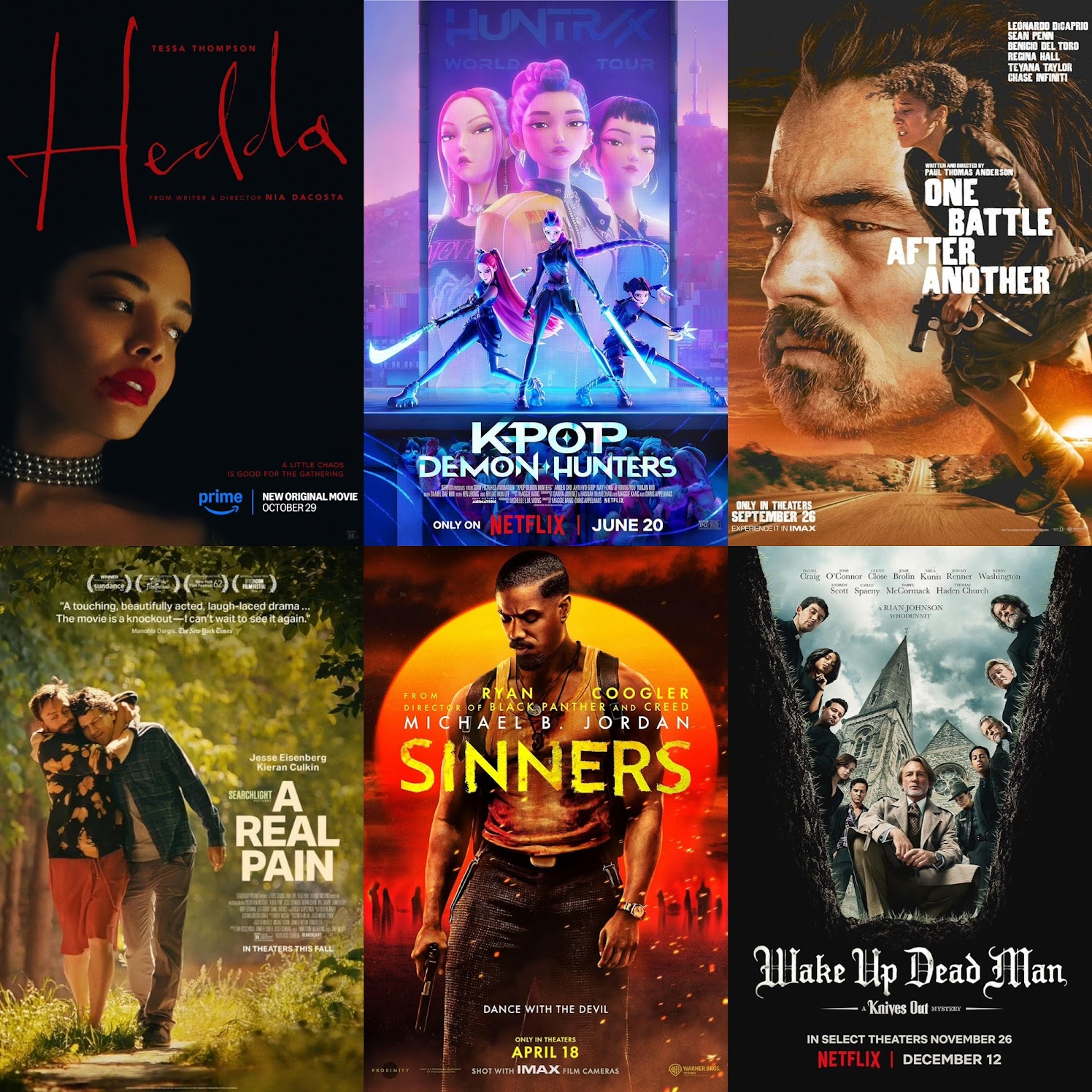
    Here are my favorites in alphabetical order.

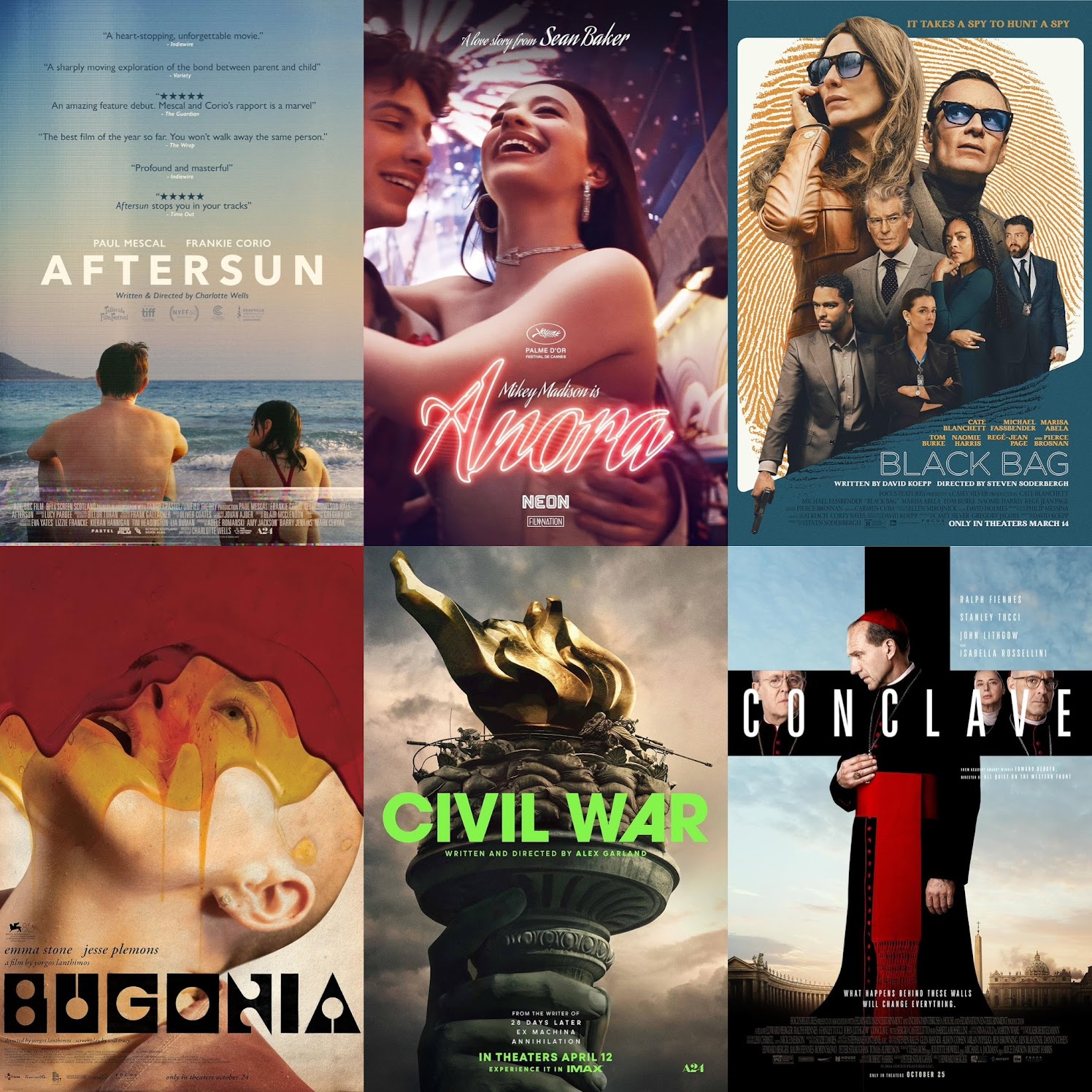
    886ddc40-224f-4d08-9a40-54b4acea38a8-image.png

    • Aftersun— File under: plot included but not entirely the point. While watching this I was unsure of the rambling, discursive structure as it depicts a man and his daughter on the cusp of teenagedom. However, the movie has been one of the films I have thought the most about throughout the year.
    • Anora— You have likely heard me (repeatedly) say how much I enjoyed this movie about an exotic dancer who meets an extremely rich Russian boy. I love how the movie continually subverts what you expect it to be about. I cannot stop thinking about the closing moments. Mikey Madison gives a powerhouse performance. This won Best Picture last year and it rightfully deserves that award.
    • Black Bag— A spy story by way of Who's Afraid of Virginia Wolf? As usual, everything Cate Blanchett does is the sexiest thing a person can do.
    • Bugonia— I have very mixed feelings around this movie about a man who has gone too deep into conspiracy theories kidnapping a pharmaceutical executive. I am not sure it is saying very much and I actively dislike the ending. However, it is an acting showcase for both Jesse Plemons and Emma Stone and it is very effective in its claustrophobia.
    • Civil War— This movie by Alex Garland is meant to illicit uncomfortable emotions as it depicts what a modern civil war in our nation's capitol could look like. Ultimately, the performances by Kirsten Dunst, Cailee Spaeny, Wagner Moura, and Jesse Plemons make it worth the watch.
    • Conclave— A twisty, turny mystery at the Vatican!

    1dce7854-0935-479cd30b7-a7aa-4b93-bdf2-c1dea879837a-image.png 2b9-9e35-93cb1c114bd5-image.png

    • Hedda— Tessa Thompson gives a tremendous performance as the titular character. Sumptuous costumes, beautiful sets, and sparkling dialogue. I am saddened that this doesn't seem to be getting the end-of-year attention it deserves.
    • KPop Demon Hunters— With a six-year-old in the house this was far and away my most watched film. Lucky for me it is also incredibly enjoyable. No wonder it took the world by storm. Here's to hoping other musical genres will explore their demon hunting potential.
    • One Battle After Another— This has almost universally been praised as the best film of the year and with good reason. While I haven't always been a Paul Thomas Anderson fan this movie is absolutely tremendous. Once the table setting is out of the way it shifts into twelfth gear and never lets up.
    • A Real Pain— Hey! We watched this one in Movie Club! More of those selections will appear below (we are extremely good at picking movies!) but this one really stood out to me. Who would have thought that cousin Fuller from Home Alone would go on to win an Oscar?
    • Sinners— The other universally beloved film of 2025; this time with 100% more vampires and 200% more Michael B. Jordan.
    • Wake Up Dead Man— Rian Johnson continues his unbroken streak of making amazing movies. The third Knives Out movie delivered not just a great mystery by a stand-out ensemble but also a loving and nuanced look at the role of faith and religion.

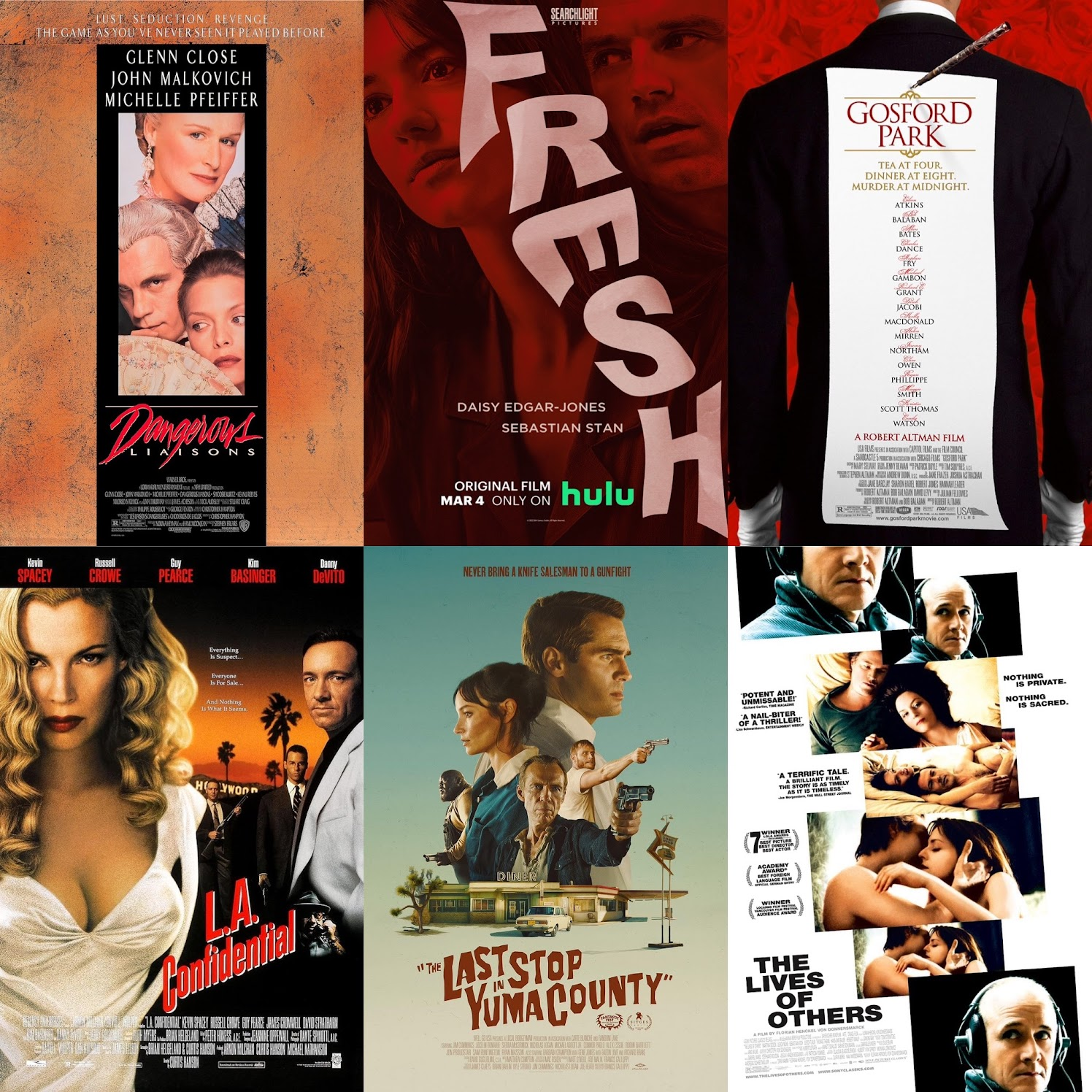
    Here are some honorable mentions.

    f2ea343a-6b52-4fbb-8ce7-7c670f871430-image.png

    • Dangerous Liaisons— This is the original Cruel Intentions. In pre-revolution France, libertines John Malkovitch and Glenn Close set out to destroy the lives of very young Uma Thurman, Michelle Pfieffer, and Keanu Reeves. Gowns and wigs and sex and sword fights abound!
    • Fresh— From my Spooky Season viewing. A young woman (Daisy Edgar-Jones) is tired of the dating scene and then meets a seemingly perfect man (Sebastian Stan). It is fun and upsetting in a fun way.
    • Gosford Park— Before Downton Abbey there was this upstairs/downstairs mystery.
    • LA Confidential— A perfect modern noir with crooked cops and femme fatales.
    • The Last Stop in Yuma County— A great modern western crime thriller. Several groups must wait in a diner in the middle of nowhere but not all the patrons are who they seem.
    • The Lives of Others— Another Movie Club selection. Wonderful cold war paranoia in East Germany.

    e38504b9-5085-45bc-8b6a-fdeb6bb60f78-image.png

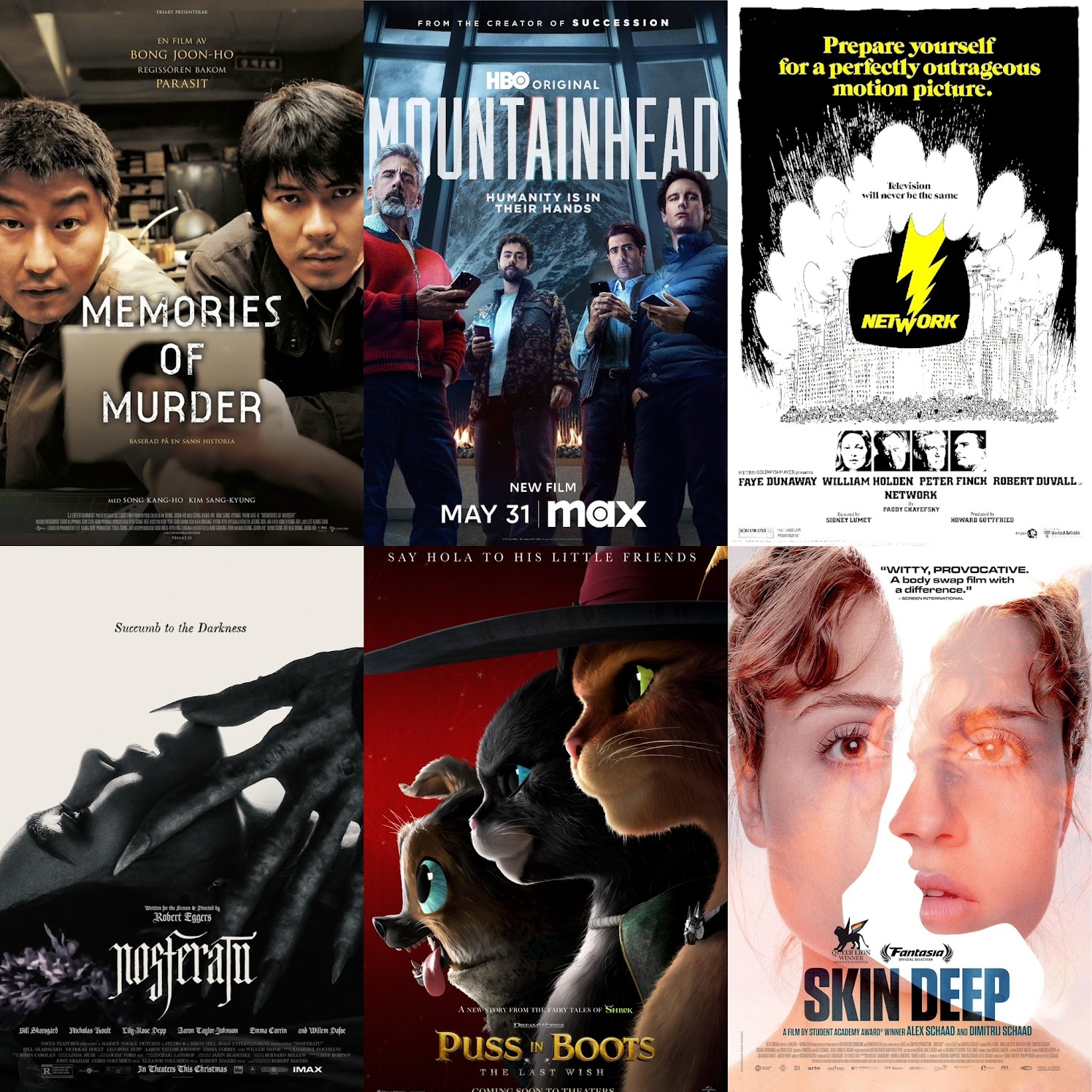
    • Memories of a Murder— A Korean neo-noir crime thriller (and sometimes black comedy?) from Boon Jong-Ho following detectives trying to solve a series of murders in rural South Korea.
    • Mountainhead— A satirical black comedy about four insanely wealthy friends vacationing in a remote retreat amid a global upheaval caused by one of their number.
    • Network— Extremely prescient satire from 1976 about news, entertainment, and the rise of populism.
    • Nosferatu— Vampires aren't sexy; they're gross! But you still have to show their wieners, I guess.
    • Puss in Boots: The Last Wish— I am decidedly not a Shrek-liker but this sequel to a spin-off is actually really great!
    • Skin Deep— Movie Club did it again! This body-switching movie never did the things I thought it would do and instead did everything it should do.

    c5573c02-f9e2-4eba-8312-137f5ffd6ea7-image.png

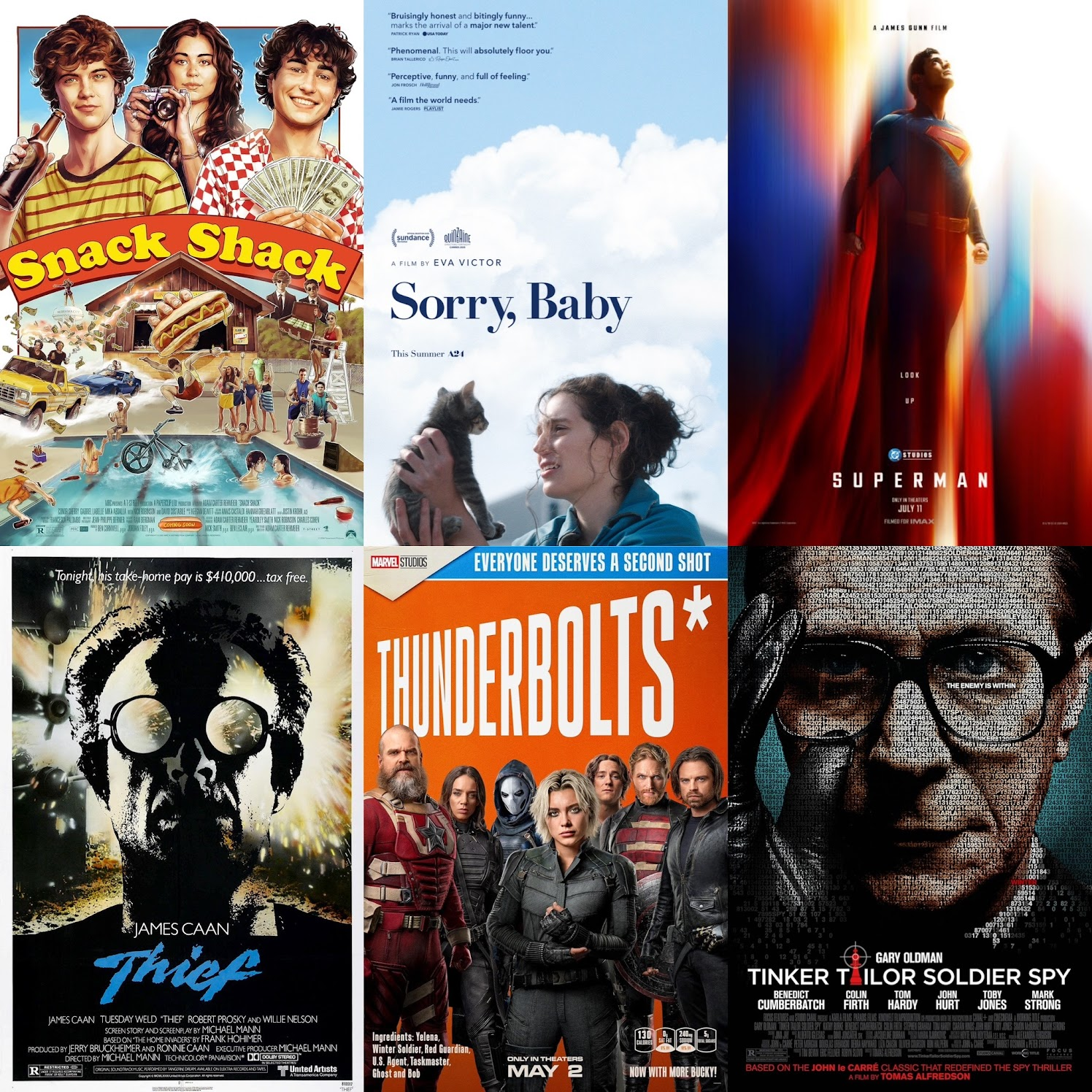
    • Snack Shack— This coming-of-age comedy about a pair of friends who run a refreshment stand at their local pool for the summer just missed out on my favorite watches of this year.
    • Sorry, Baby— Agnes (Eva Victor who wrote, directed, and stars) is a literature professor at a small college in New England. Agnes has suffered a traumatic event and the film follows her as she navigates the aftermath.
    • Superman— An earnest Superman that says "Gosh darn it!" and is fostering a super dog is what I want out of a Superman movie. David Coronswet is my Superman.
    • Thief— Michael Mann's feature film debut is a slick, stylish neo-noir heist film with James Caan and a synth heavy score by Tangerine Dream.
    • Thunderbolts— Who doesn't love a team of dysfunctional anti-heroes that is about depression and where the day is saved via group hug?
    • Tinker Tailor Soldier Spy— If you allow the Swedish director of Let the Right One In to make a Cold War spy drama it will be slow and moody.

    c72b2570-c927-4bd5-93d6-14940eaea337-image.png

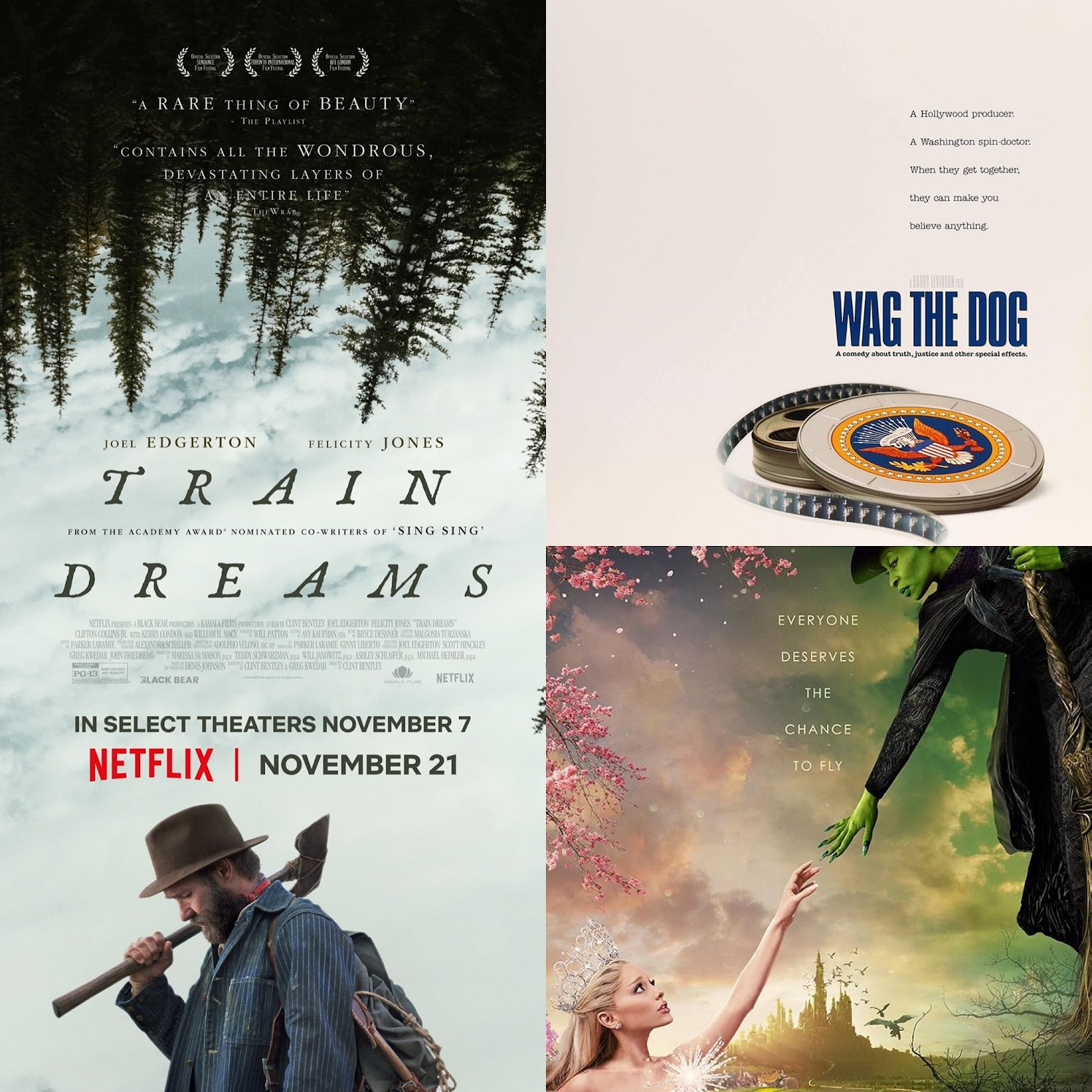
    • Train Dreams— Follows the life of Robert (Joel Edgerton) as he tries to scrape out a living on the western frontier.
    • Wag the Dog— Another prescient satire of politics and the news cycle.
    • Wicked— Just good old-fashioned movie making. Cynthia Erivo and Ariana Grande are tremendous here. The scene of them dancing together is incredibly effective and gets me every time.

    Most importantly, what movies did you watch and enjoy this year?


    I actively loved the ending of Bugonia, but 100% understand anyone feeling the exact opposite.
  • jeffmowerJ

    I read a lot of comics and, unfortunately for you, a lot of them are really enjoyable. Buckle in, this is going to be a long one. Hopefully you will find something here that you think looks interesting.

    I separated this into Marvel, DC, and all books not published by Marvel/DC. Maybe I should have done superhero stuff and not-superhero stuff? Too late now!

    a182c64f-9294-4671-b6d2-0690d6032fee-image.png

    Not Marvel/DC

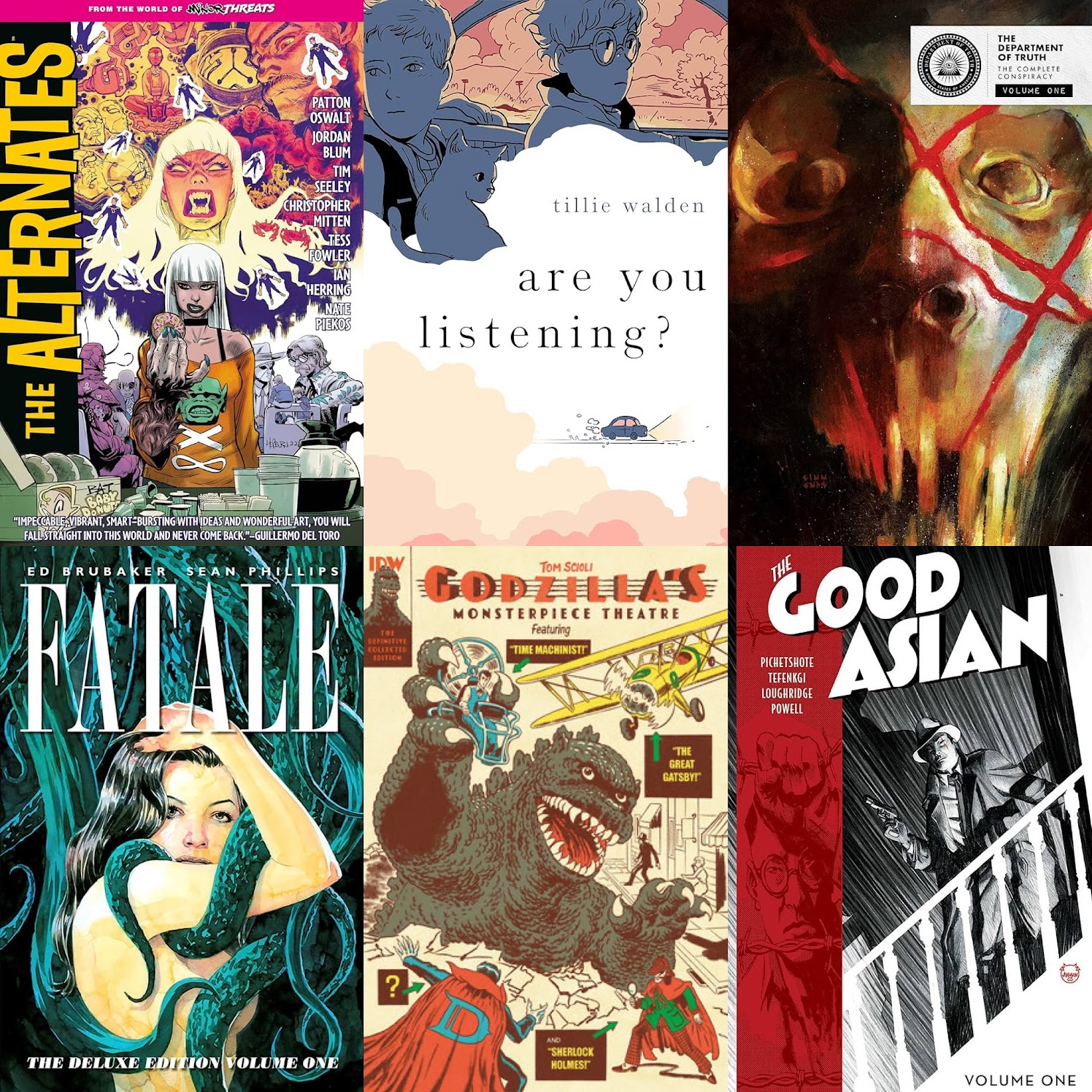
    • From the World of Minor Threats: The Alternates by Jordan Blum, Patton Oswalt, Tim Seeley, Tess Fowler, & Christopher Mitten— This Minor Threats spin-off series follows a group of D-list superheroes trying to reclaim their true potential after having achieved their dreams in another, more complex, reality.
    • Are You Listening? by Tillie Walden— Two women take a magical realistic road trip. Lovely art by Tillie Walden. You'll see that name again in a bit.
    • The Department of Truth by James Tynion IV & Martin Simmonds— What if all conspiracy theories from the JFK assassination, to Bigfoot, to Flat Earth Theory were true and there was a government agency responsible for containing and covering them up?
    • Fatale by Ed Brubaker & Sean Phillips— The Brubaker/Phillips team have made dozens of great crime and noir comics and this is no exception. This time they threw in a dash of stygian horror into the mix with great results.
    • Godzilla's Monsterpiece Theatre: Godzilla vs Great Gatsby by Tom Scioli— Jay Gatsby from “The Great Gatsby” joins forces with Sherlock Holmes, The Time Machinist, and a cybernetic Jules Verne to defeat the King of Monsters. Of course things get complicated when Dracula, the Mummy, and a werewolf show up. Plus, they are magically supersized to fight Godzilla, so that’s a pickle. If you’re wondering, “Does Jay Gatsby get magically increased in size to fight them all, truly becoming ‘The Great Gatsby’?” the answer would be, “Obviously!” Don’t even try to tell me that comics aren’t the best possible art form created in this (or any other) universe.
    • The Good Asian by Pornsak Picheshote & Alexandre Tefenkgi— A noir story set in 1936 San Francisco that centers Asian characters and voices.

    f3a7b85b-15d9-4e3c-840d-46a743c433f0-image.png

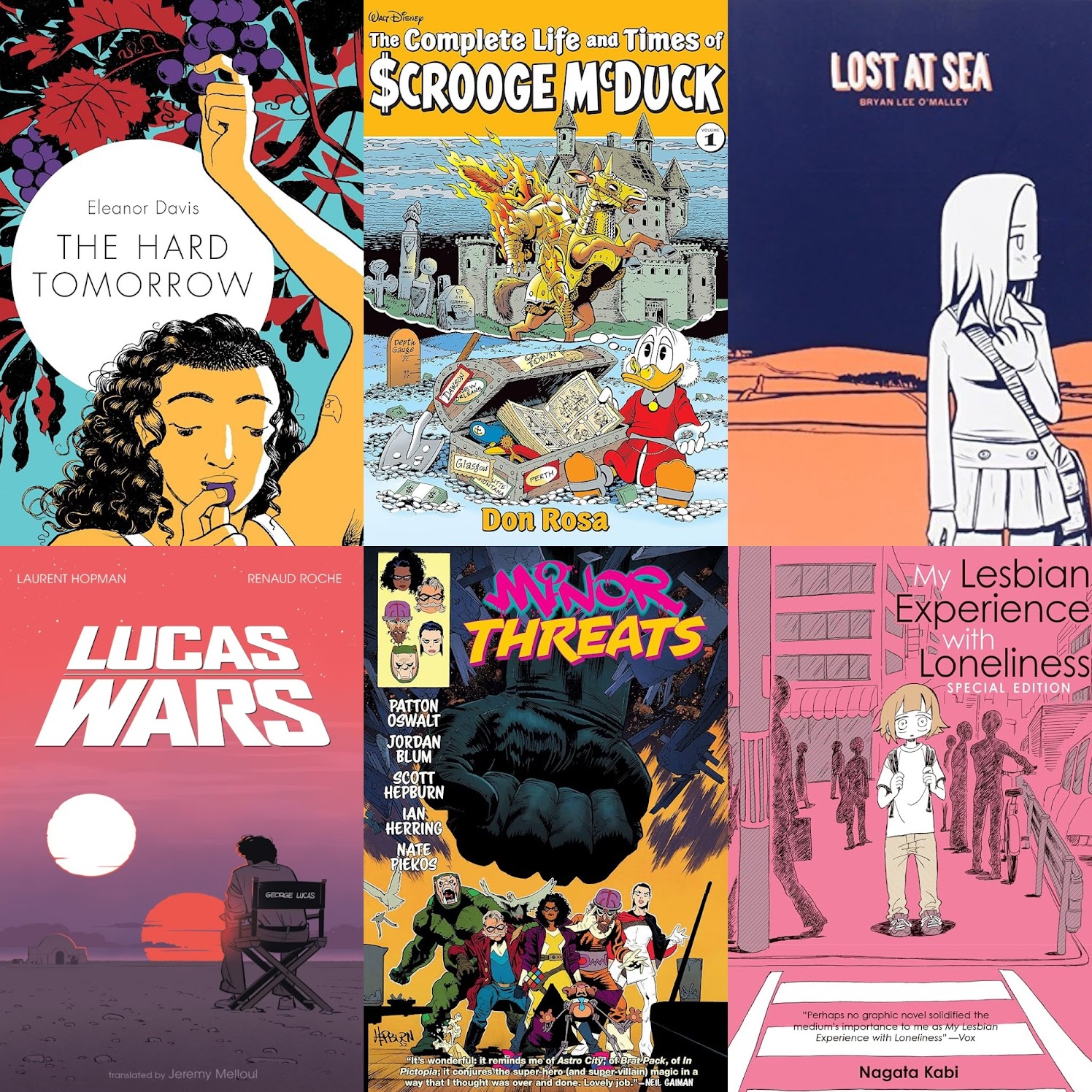
    • The Hard Tomorrow by Eleanor Davis— I'm not sure how to sum this up succinctly. I think I can say that it is about the fear and hope for tomorrow, desire, and family.
    • The Life & Times of Scrooge McDuck Vol. 1 by Don Rosa— I've always loved DuckTales and the long history of "Duck comics." This is a synthesized tale of the life of Scrooge McDuck told by Don Rosa.
    • Lost at Sea by Bryan Lee O'Malley—
    • Lucas Wars: The True Story of George Lucas and the Creation of Star Wars by Laurent Hopman & Renaud Roche—
    • Minor Threats by Patton Oswalt, Jordan Blum, & Scott Hepburn— Minor Threats is a love letter to D-list characters in comics. This series follows a group od D-listers who decide they have had enough of the endless warring between the A-list heroes and villains.
    • My Lesbian Experience with Loneliness by Nagata Kabi— If you didn't read this for Comic Book Club you definitely should. It is raw and open and revealing in the best way a comic can be.

    93abbd36-5549-454f-828b-0f4b87117825-image.png

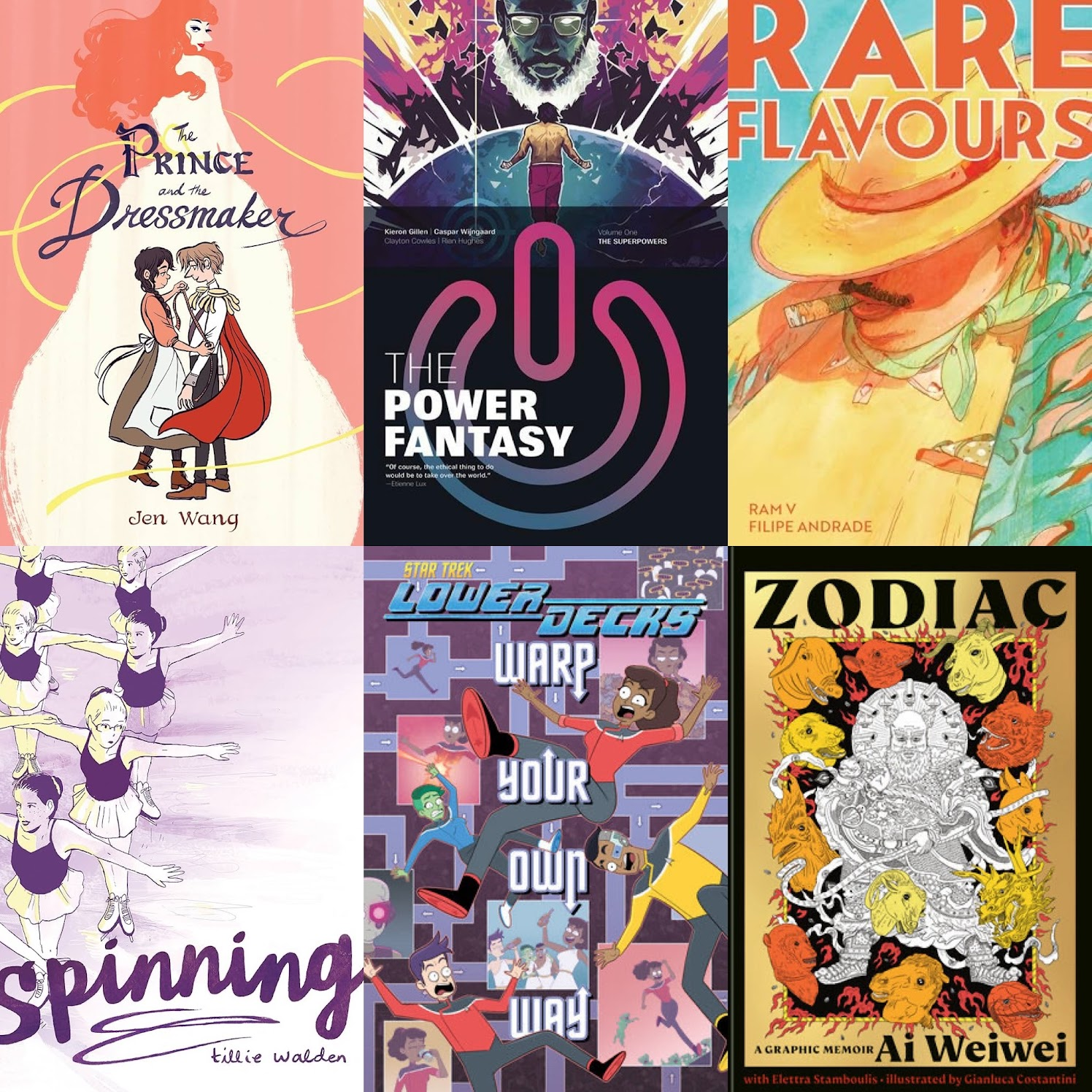
    • The Prince & the Dressmaker by Jen Wang— A modern fairytale about identity, love, and self-expression.
    • The Power Fantasy by Kieron Gillen & Caspar Wijngaard— Perhaps my favorite comic writer, Gillen asks, "What if the Watchmen was made up of six Doctor Manhattans?" There are six powerful beings with world-ending abilities and they must never come into conflict.
    • Rare Flavours by Ram V & Filipe Andrade— Another difficult to summarize book. Rare Flavours is about food, and people, and art. This is probably the book I have thought about the most this year.
    • Spinning by Tillie Walden— Here is that other Tillie Walden book I promised. This is a memoir of her childhood spent figure skating.
    • Star Trek: Lower Decks: Warp Your Own Way by Ryan North & Chris Finoglio— Ryan North uses the Choose-Your-Own-Adventure format to great effect here. This book understands that you will keep your fingers in the pages in order to go back and make a different choice and makes that a feature of the narrative. Plus, it has pitch-perfect voices of the Ceritos crew!
    • Zodiac: A Graphic Memoir by Ai Weiwei & Gianluca Constantini— Ai Weiwei uses the Chinese zodiac and folklore to bring his life and work to the page.

    212844cd-e656-4bbd-bf96-93dc722a7652-image.png

    DC

    • Absolute Batman Vol. 1 by Scott Snyder & Nick Dragotta— The Absolute Universe is a strange, maximalist version of the main DC Universe. Absolute Batman is stated as being 6' 9" and 419 lbs. He grew up in Crime Alley with the Penguin, Riddler, and Killer Croc. His parents were teachers, not millionaires. With so much of what we know about Bruce Wayne to be different one thing remains the same; he still manages to kick a lot of ass.
    • Absolute Superman Vol. 1 by Jason Aaron & Rafa Sandoval— Absolute Superman see Kal-El witness the destruction of his home planet, and the death of his parents, as a teenager. He comes to Earth scared and confused and angry and decides to fight the mega-corporation Lazarus.
    • Absolute Wonder Woman Vol. 1 by Kelly Thompson & Hayden Sherman— Absolute Wonder Woman was raised by Circe in the underworld. She learns magic, has a giant anime sword, and an undead Pegasus.
    • Birds of Prey Vol. 2 by Kelly Thompson & Javier Pina— Thompson is a favorite writer and her run on BoP has specifically been about "women helping women." Sign me up!
    • Poison Ivy by G. Willow Wilson & Marcio Takara— Ivy sets out to heal the earth by destroying humanity and maybe find her own humanity along the way.
    • Zatanna: Bring Down the House by Mariko Tamaki & Javier Rodriguez— I'll read anything by Mariko Tamaki. Zatanna, an extremely powerful magician, is now performing fake magic in Las Vegas.

    9900c4fd-c6cb-4e67-bff2-0588c7290c93-image.png

    Marvel

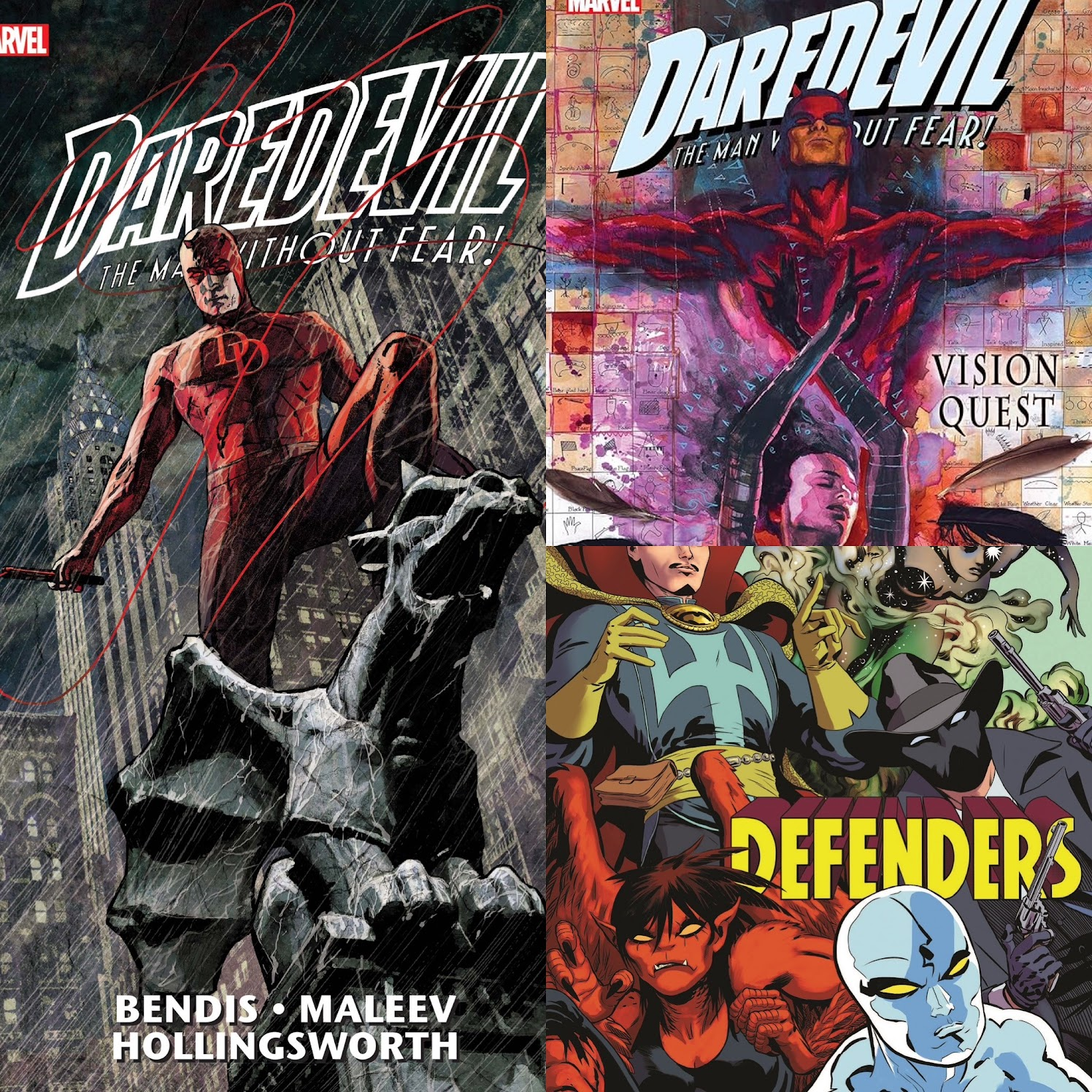
    • Daredevil by Brian Michael Bendis & Alex Maleev— Last year I started my journey to read nearly all Daredevil comics. This year I read 18 volumes! Yeesh! This first run by Bendis & Maleev has been the highlight so far.
    • Daredevil: Echo: Vision Quest by David Mack— This short run by David Mack focuses on Echo, a deaf Native American woman with a storied past. I love a book with multiple subtitles!
    • Defenders by Al Ewing & Javier Rodriguez— This "non-team" gets extremely conceptual and is exactly my jam.

    What comics did you read and enjoy this year?


    @ashley_p I love Vera Brosgol, I'm pretty sure I've not heard of this book yet but I really like everything she's worked on. She was one of the artists on Guillermo del Toro's Pinocchio!
  • jeffmowerJ

    In my ongoing project to read 50 Pulitzer Prize winners for fiction I read four this year.
    c29518c3-10fe-465a-94e9-7f68839f0d84-image.png

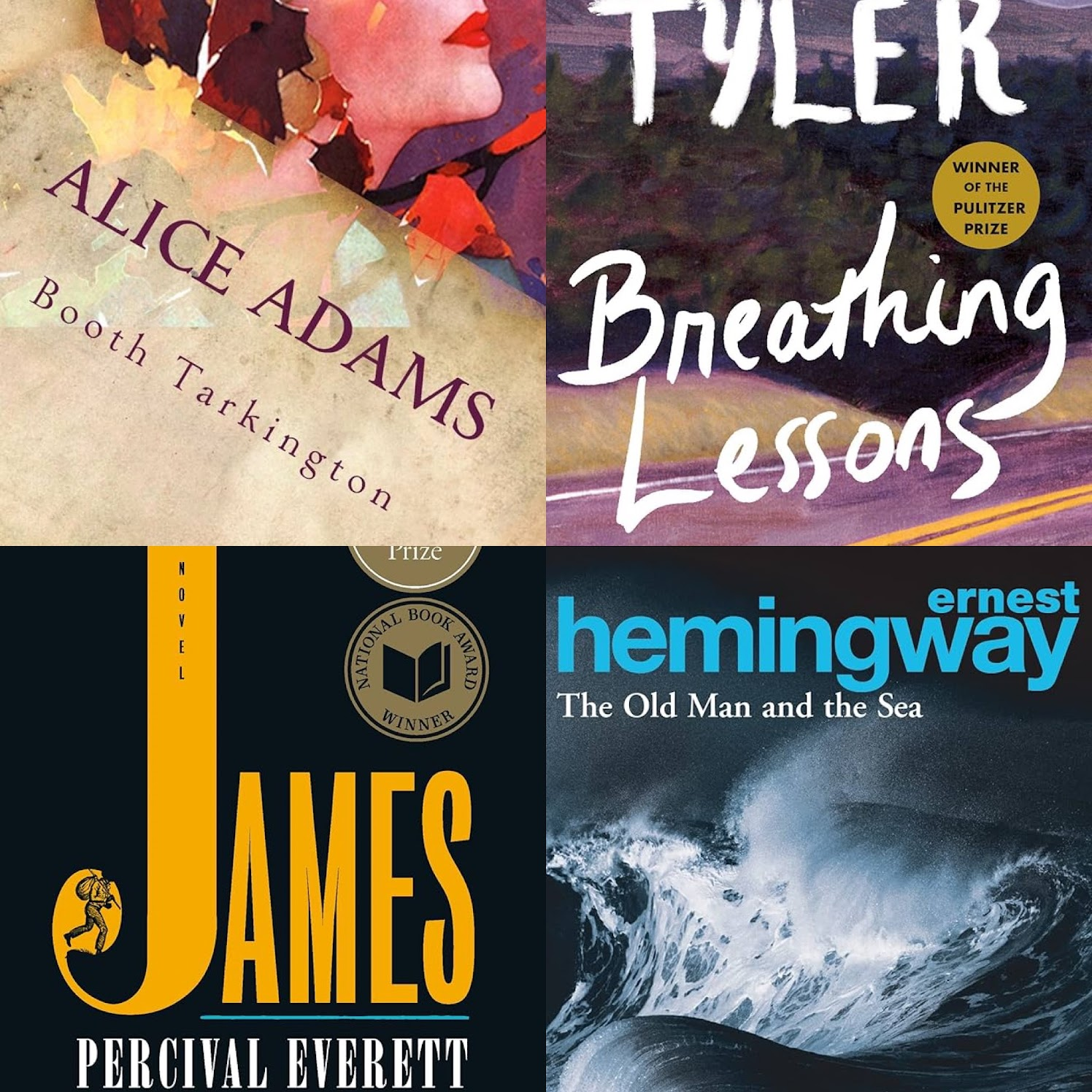
    • Alice Adams by Booth Tarkington— Tarkington won two Pulitzers in his time, this being his second win. And yet, while he was hailed as an one of the most important writers of his time his legacy has not continued. The title character is a young middle class woman who desperately wants to climb the social ladder. Unfortunately, her desperation is her undoing. Pulitzer Prize winner 1921.
    • Breathing Lessons by Anne Tyler— Follows an older couple on a trip to a funeral and unspools their lives together, their unmet expectations, disappointments, and their commitment to each other. Pulitzer Prize winner 1988.
    • James by Percival Everett— A retelling of Huckleberry Finn from Jim's perspective. This is the best kind of this type of novel; reexamining the original, well-known narrative and adding meaning and strength to it. Pulitzer Prize winner 2025.
    • The Old Man & The Sea by Ernest Hemingway— You're probably familiar with this one. If, like me, you haven't revisited it since high school I would recommend taking an afternoon to sit with it as it is still wonderful. Pulitzer Prize winner 1952.

    Just Darn Good Books

    I also read a number of novels that weren't Pulitzer Prize winners. Here are some that I loved.
    be1dabe3-90ce-43a2-84c5-29a9decd0d5a-image.png

    • Gravity's Rainbow by Thomas Pynchon— Technically this won the Pulitzer Prize in 1974 but the prize advisory board rejected it as being "obscene." It is at turns confusing and opaque while still managing to be being beautifully written.
    • Harlem Shuffle by Colson Whitehead— Whitehead is another winner of multiple Pulitzers (Underground Railroad and The Nickel Boys). This is his take on a crime novel telling the story of the owner of a furniture store who slowly descends into a life of crime.
    • Henderson the Rain King by Saul Bellow— This book has long served as my father's alter ego. Henderson is a middle-aged man who goes to Africa to find purpose and gets involved in a number of misadventures.
    • The Seven Moons of Maali Almeida— Set in Sri Lanka in the 1980s, Maali Almeida is a dead photographer who is attempting to solve his own murder.
    • The Silence of the Girls by Pat Barker— In the vein of Circe or Song of Achilles, this is a retelling of the Trojan War from the perspective of Briseis and other women taken captive by the Greeks. While the aforementioned novels are better, this one still has a lot to say about the plight of women during wartime.
    • Weather by Jenny Offill— A librarian struggles with anxiety before and after the election of Donald Trump.

    What fiction did you enjoy reading this year?


    read more →
    @ashley_p if you liked Circe I would recommend Song of Achilles. It's the other half of the story (The Illiad) from Patrochlus's perspective.
  • jeffmowerJ

    8e7b87fe-00d2-4cec-a3fe-3dbececaaccc-image.png
    0434b0cc-215a-472f-b12f-693da59e3856-image.png

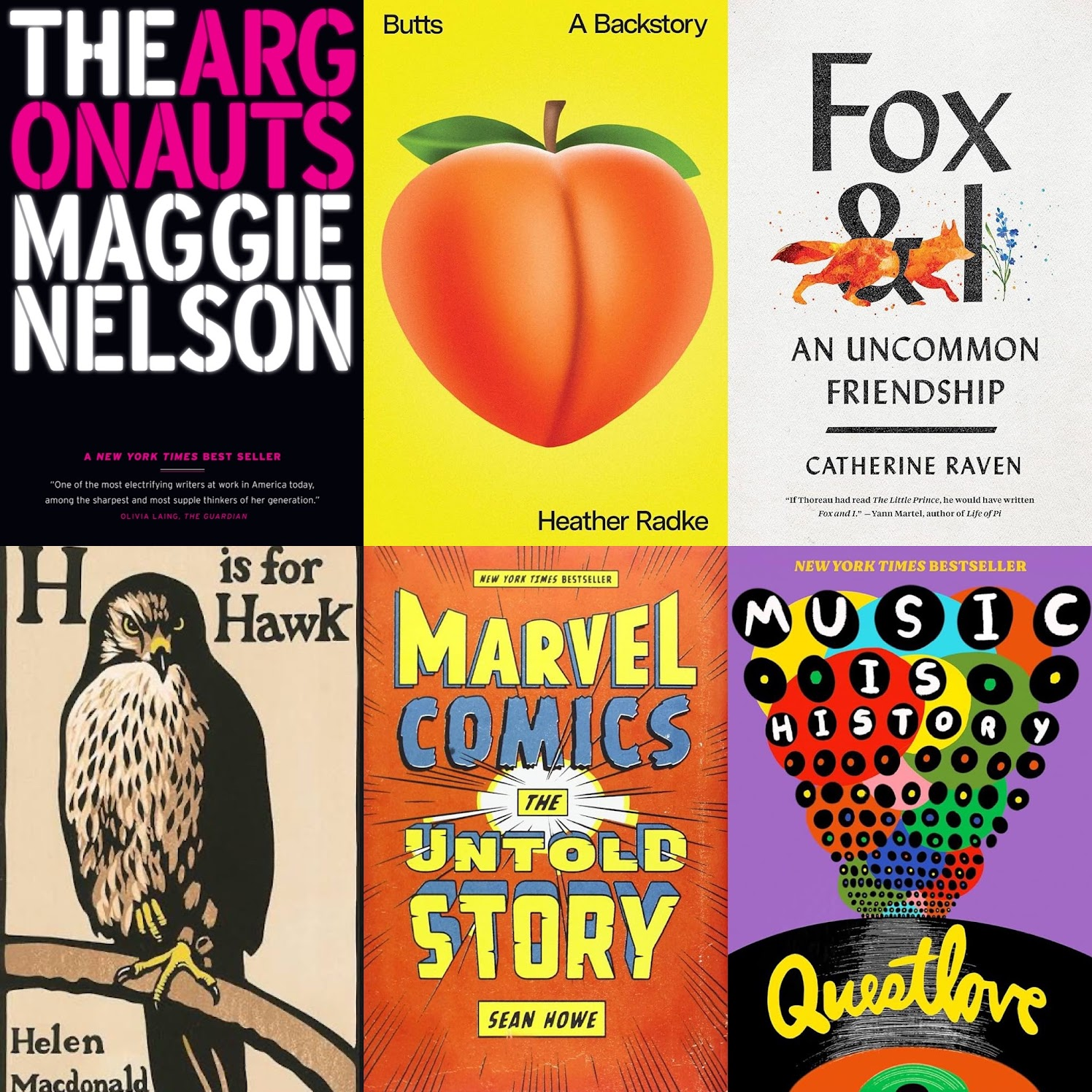
    • The Argonauts by Maggie Nelson - I know I say this about every other book I read but I mean it when I say this is one of the most interesting books I have read in my life. It asked so many important, engaging questions and opened my eyes to ideas and philosophies I had not fully fleshed out in my mind.
      It is a staggeringly open, free, and raw examination of identity and self, queer and gender theory, death, and language. It is a memoir of a woman going through pregnancy while her partner transitions from female to male. It is a story of love. It is amazing.
    • Butts: A Backstory by Heather Radke - The science of butts, their cultural history, and how butts are racist.
    • Fox & I: An Uncommon Friendship by Catherine Raven - Science writing with a personal touch. The author forms a friendship of sorts with a fox who visits her remote cabin. Through this bond she discusses solitude, connection, and loss.
    • H is for Hawk by Helen Macdonald - Another memoir about a woman forming a life-changing bond with an animal. A beautifully written and personal tale of grief, falconry, healing, and T. H. White.
    • Marvel Comics: The Untold Story by Sean Howe - An interesting history of the ups and downs of Marvel comics over the years. Interesting to a comics fan, at least.
    • Music is History by Questlove - Fantastic cultural criticism with music in the foreground.
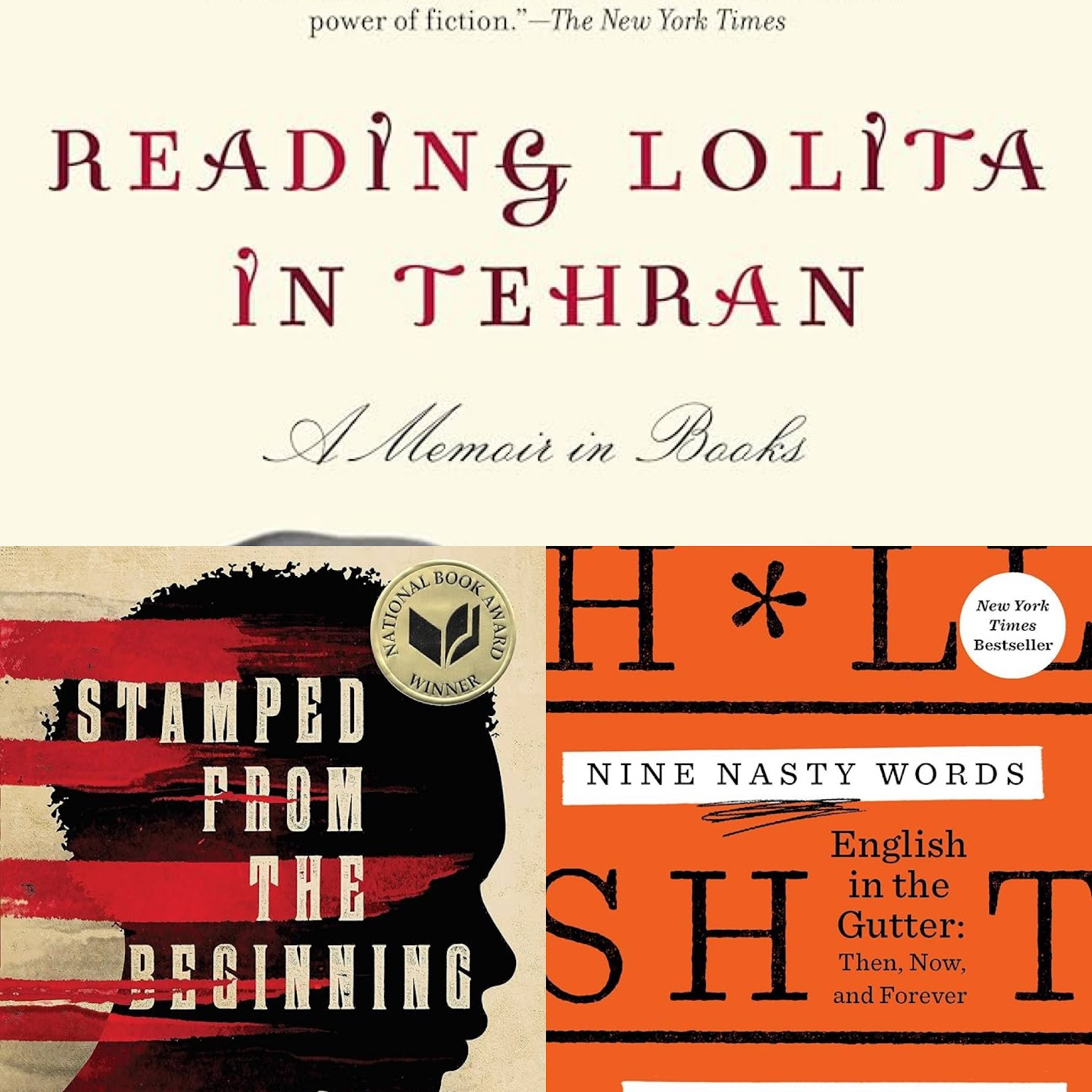
    • Reading Lolita in Tehran: A Memoir in Books by Azar Nafisi - Part memoir about being an english literature professor in Iran, part literary criticism that demonstrates the relevance and meaning of fiction. Entirely captivating.
    • Stamped from the Beginning: The Definitive History of Racist Ideas in America by Ibram X. Kendi - As the subtitle suggests, this book details how everything in America (not just butts) is founded on and perpetuates racist ideas and practices. It is a constant barrage of dates, names, and actions detailing America's sins and crimes against humanity.
    • Nine Nasty Words: English in the Gutter: Then, Now, and Forever by John McWhorter - Explores the history and ever-changing nature of language throughout time. Words and phrases that were once benign become profane and taboo (and vice-versa).

    What non-fiction did you enjoy reading this year?


    @Amanda This sounds really good and enraging.
  • scottpS

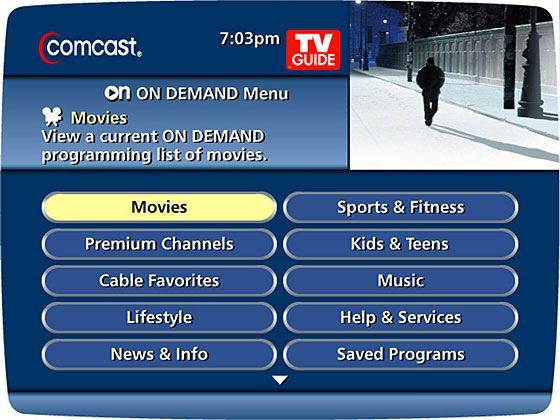
    oSxeKhc.jpeg
    Image via a now-deleted Reddit user

    The Before Times

    It's sometime in the mid to early 2000s. You and your friends cram onto an aging couch in a poorly lit basement in an attempt to escape the scorching heat of the summer. One of you fishes a remote out from between the cushions.

    As you cycle aimlessly from channel to channel one of your friends suggests something called On Demand.

    You press your remote's dedicated Video On Demand button and are presented with the pinnacle of graphic design and the most meager of titles. You choose one at random as you are tired of scrolling through a sea of channels that are somehow all on commercial break. Excluding the single paragraph blurb presented during selection, none of you know what you're about to watch. None of you have a smart phone and the idea of walking over to a computer to research the selections available seems like an absurd use of time.

    You and your friends have never heard the word "streaming" before.

    By the time the decade closed out, most young Americans would have some notion of streaming video through services like Netflix and Hulu. It would still be years before Netflix Originals like Hemlock Grove or Orange is the New Black would make an appearance.

    In these early days, streaming services – or "Video On Demand" as most American's had come to know this type of service from their cable set-top remotes – offered a new layer to the media landscape. While still far too immature to truly replace cable or satellite TV, streaming services leaned hard into a concept completely foreign to consumers at the time – choice.

    No longer were you beholden to the scheduling and programming of Big Media. You were free to go about your day and catch up on your favorite shows on your time, not the other way around. You would finally be free from the fear of missing the climactic finale of the show you and all of your coworkers were talking about.

    The supplantation of traditional media had begun.

    With the digitization of over-the-air broadcasts – and the failure of most American's to make that transition (good-bye bunny-ears) – the choice of entertainment became less about what shows to watch and more about which services to subscribe to. Sure, cable and satellite weren't going anywhere, but to be in-the-know on the latest media trends meant to be caught up on Breaking Bad.

    As the volume of titles grew, so did market fragmentation, and no longer were consumers safe to assume their favorite title would be on Netflix. These changes in the landscape, however, rolled out gradually – gradually enough that we kept up dutifully. No longer were our heads filled with the airing schedule of Lost, instead being occupied by which platform had Futurama now.

    This brings us to today. Streaming services now collectively have over a billion users globally, with Netflix alone making up roughly 25% of that number. At our fingertips is a massive catalog of over 800,000 unique titles in the US alone.

    Why Too Much Choice Might be the Wrong Choice

    It's important to clarify that having choice is great. Not just from the perspective of owning your time in a way that traditional cable didn't allow for, but an argument could be made that media choice has given rise to a more diverse range of content and representation, with production companies incentivized to create the broadest landscape of options instead of focusing solely on the least common denominator. Giving this up in exchange for a return to cable or over-the-air programming is clearly a step in the wrong direction, but the hyper-consumption of videos from a dozen or so streaming platforms creates a different kind of problem: decision fatigue.

    This is a real, medically researched phenomenon that you've likely heard referenced in casual conversation sometime in the last decade, even if just in the form of dubious facts about Albert Einstein wearing the same outfit every day as a way to focus on more important things.

    In our modern, highly connected life, the problem of decision fatigue isn't limited to media consumption; rather, it is the harbinger of a broader cultural shift. We, as people, are busy. Our time is valuable. Our money is finite. Each choice impacts the way we spend those resources. For many of us, we care about what we watch in much the same way we care about the clothes we wear. Our choice in what we watch signals to those we interact with what is important to us, what we find interesting, and what we can collectively discuss around the water cooler. Imagine being the one Cricket fan in a crowd of Hockey aficionados.

    It's a decision that we have to make every time we turn on the television and start browsing for a respite from the woes of the day. It's a decision that is entirely unavoidable if you want to watch anything. Your streaming services will recommend content, but the days of turning on your TV and being immediately greeted with whatever channel it was last tuned to are gone.

    "It's one small decision – how hard could it be?"

    It's true. For most people, this is maybe just a small decision and one made with ease. Perhaps you're the sort of person who has a rotation of shows and a system that keeps your choices focused. It feels manageable to the point where you don't spend any time thinking about it. But how much work does it take to get there?

    If you're the sort of person that stops to look up reviews for a product while standing in the aisle of a real-life, brick-and-mortar store then you already understand what I'm talking about. It's not just the choice, it's about making the best choice. With the internet at our beck and call it's hard to avoid the temptation of taking just a few moments to research the choices in front of us. Maybe it's to compare prices, maybe it's to check reviews, or maybe it's to find the New York Times' list of must watch shows of the decade so you can narrow down how you're going to spend your weekend. This is effort. This is energy. This is time spent making a selection that wasn't part of our daily lives fifteen years ago. This is a problem compounded further by the ready abundance of choices in what we eat, what we buy, or where we go on holiday – all of which can be researched and arranged endlessly from the comfort of wherever we and our phones are. Life isn't a simple list of curations, it's an onslaught of constant, globally-sourceable options and a cacophony of influences shouting over each other that they have the best choice out there.

    So, What Now?

    Maybe none of this is news to you, and you've spent every sleepless night thinking about this exact problem. So what do we do?

    Going back to the pre-internet era is obviously not an option (unless you're doing a bit for Youtube).


    Replacing streaming services with physical media is a fun novelty, but doesn't really do much to cut down on daily decision making.

    For some small break from the cycle, consume more consciously. Resist the temptation to skip intros, get comfortable sitting through end credits, and turn off autoplay. Each video consumed should feel fulfilling in a way that binging just can't, and in doing so, will likely slow your consumption down significantly. The less media you plow through the less often you have to ask yourself, "so, what's next?"

    It goes without saying, but the easiest way to cut down on the number of decisions having to be made is by cutting down on the number of options available. If you're the sort of person subscribed to Disney+, Peacock, Paramount+, Netflix, Hulu, Prime Video, HBO Max, Apple TV, Starz, and Youtube Premium then it might be time to cancel all but one or two. Your wallet will probably be happier, too.

    Most importantly, simply being aware that you're having to make so many decisions is an important step. Build routines around it. This could be meal planning and/or prepping, picking out outfits for the week, and deciding on the rotation of what you're currently watching. Spending time once a week making decisions for the entire week is far less taxing than making a thousand small decisions throughout the week. Have a fallback for when you are too burned out – a go-to outfit, a reliable take-out joint, or a good book you want to finish reading. Avoid the fallacy that platforms like TikTok or "doom scrolling" are the solution to decision fatigue – they come with their own mental health costs.

    @jeffmower Oh, I like this. The idea that I couldn't possibly read every book tortured me as a kid, but I've come to realize that most of those books aren't for me, anyway. I would rather sit with a small collection of books representing a diverse range of ideas than mindlessly consume thousands of works just to say I did. That being said, I've watched over 40 seasons of Survivor, now, so everything has its purpose.